
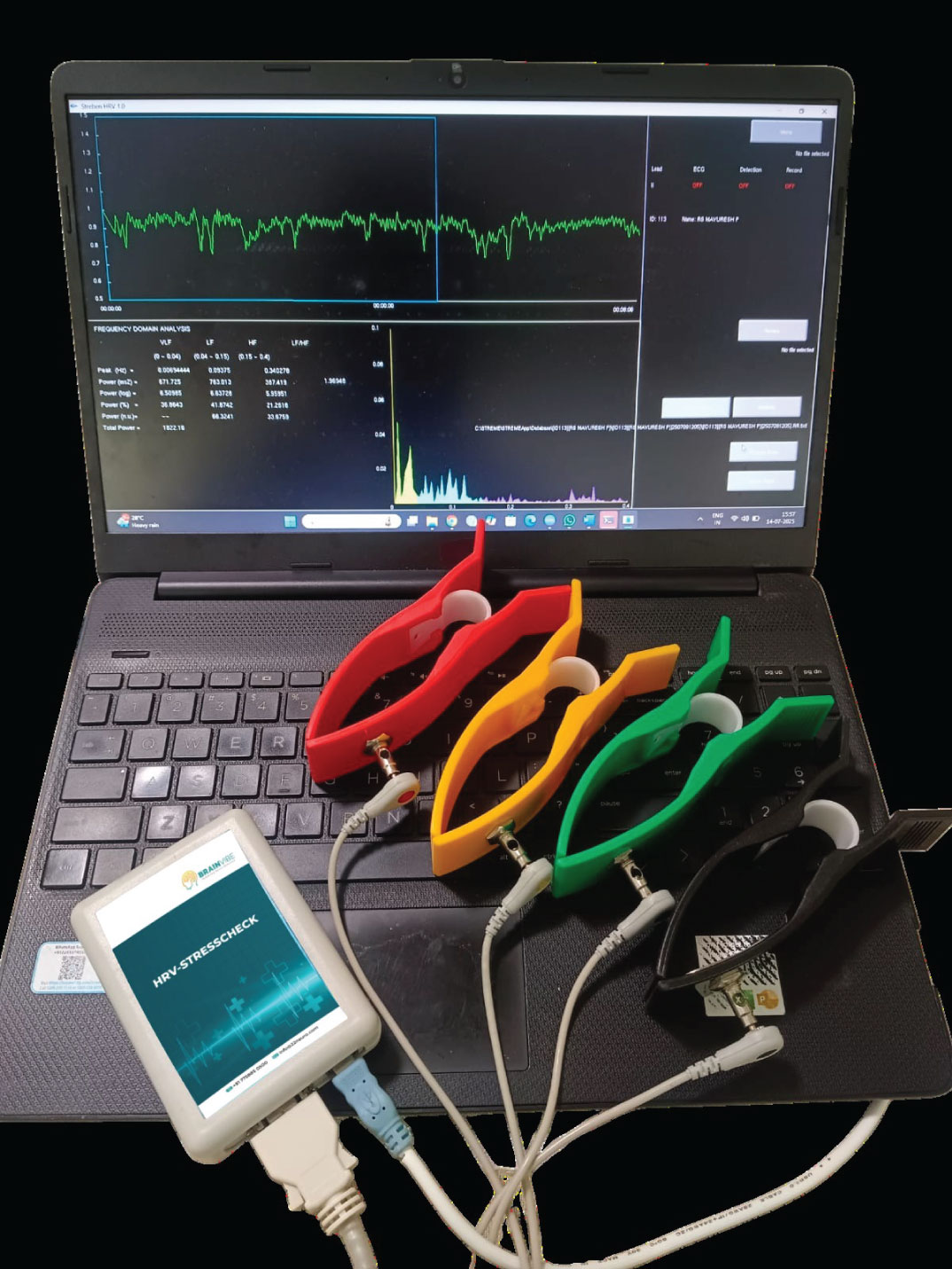
Heart Rate Variability (HRV) is a simple and effective way to track how your heart responds to stress and recovery. Monitoring HRV can give you valuable insights into your heart health and overall well-being. With the help of non-invasive tools, more people are now using HRV monitoring to better understand their bodies. In this blog, we’ll explore what HRV is, how it relates to your heart health, and how you can use it to track stress and recovery.
What is HRV?
HRV stands for Heart Rate Variability. It measures the small changes in time between each heartbeat. For example, if your heart beats 60 times in a minute, the time between each beat is not always the same. Sometimes, the gap is slightly longer or shorter. This natural variation is called HRV.
Doctors and scientists use HRV to assess your body’s response to stress. A higher HRV generally means your body can handle stress well, while a lower HRV may indicate your body is under stress or hasn’t fully recovered.
How HRV Relates to Heart Health
HRV and heart health are closely linked. According to the World Health Organization (WHO) and the Centers for Disease Control and Prevention (CDC), a healthy heart doesn’t beat like a metronome. Instead, it adapts to your body’s needs.
A high HRV usually indicates that your heart and nervous system are functioning well. Conversely, low HRV may point to stress, fatigue, or even heart issues. By tracking HRV, you can spot early changes in your heart health and take action before problems escalate.
Non-Invasive HRV Monitoring: Methods and Devices
Measuring HRV is now easier than ever with non-invasive monitoring devices. Many tools are available to help you track your HRV without pain or needles.
- Smartwatches and fitness bands: Many popular wearable brands include HRV tracking.
- Chest straps: Often used by athletes for more accurate measurements.
- Mobile apps: Some apps can measure HRV through your phone’s camera or connect to wearable devices.
These tools give you real-time data, making it easy to track your heart health and stress levels from the comfort of your home or on the go.
HRV as a Tool for Tracking Stress and Recovery
HRV is a useful tool for understanding your stress and recovery patterns. When you’re stressed, your HRV often drops. After relaxation or rest, your HRV typically rises, helping you gauge how well you’re recovering.
Athletes use HRV to plan their workouts. For example, if HRV is low, they may opt to rest. If HRV is high, they know their body is ready for more intense activity. You can apply the same principle to manage work, exercise, and relaxation in your daily routine.
Benefits of Monitoring HRV for Everyday Health
There are many reasons to monitor your HRV regularly. Not only does it help identify stress, but it also offers insights into your recovery. Some benefits include:
- Early warning signs: HRV can alert you to changes in health before symptoms appear.
- Better stress management: You can identify activities that help you relax and cope with stress.
- Improved sleep: Tracking HRV may reveal patterns that improve your sleep habits.
- Personalized fitness: Adjust your workout routine based on HRV readings.
With the ease of tracking, many people now incorporate HRV into their daily wellness routines.
Practical Tips to Improve HRV
Improving HRV is possible with simple lifestyle changes. Here are a few tips to boost your HRV:
- Sleep well: Ensure you’re getting enough quality sleep each night.
- Practice deep breathing or meditation: These techniques activate the parasympathetic nervous system, improving HRV.
- Exercise regularly, but don’t overtrain: Moderation is key to boosting HRV.
- Eat a balanced diet: Focus on a diet rich in fruits, vegetables, and whole foods.
- Stay hydrated: Proper hydration supports your nervous system and overall health.
- Relax and unwind: Take breaks throughout the day to reduce stress and improve recovery.
Small changes can have a big impact over time but remember that individual needs vary. Find what works best for you.
When to Consult a Healthcare Professional
While HRV is an excellent tracking tool, it is not a substitute for professional medical advice. If you notice significant drops in your HRV or experience any health concerns, consult a healthcare professional. They can provide guidance on how to interpret your HRV data and any necessary steps for improving your health.
If you have existing heart conditions or other health issues, always check with your doctor before making major lifestyle changes or starting a new health monitoring regimen.
Summary
HRV offers a simple, non-invasive way to monitor your heart health, stress levels, and recovery. By tracking HRV, you can gain valuable insights into your well-being. For personalized HRV testing and advice, consult a healthcare professional who can provide specialized tests and guidance on managing stress and recovery
References
1. Heart Rate Variability and Cardiovascular Risk. (2023, September 14). National Library of Medicine (PubMed). Retrieved January 9, 2026, from https://pubmed.ncbi.nlm.nih.gov/31256824/
2.Task Force of the European Society of Cardiology, & the North American Society of Pacing and Electrophysiology. (1996). Heart rate variability: Standards of measurement, physiological interpretation, and clinical use. Circulation, 93(5), 1043–1065. https://doi.org/10.1161/01.CIR.93.5.1043
3. Centers for Disease Control and Prevention (CDC). (2024, May 15). About heart disease and mental health. https://www.cdc.gov/heart-disease/about/about-heart-disease-and-mental-health.html