
Introduction to HRV and Cardiac Rehabilitation
After a heart event, many people join cardiac rehabilitation. This program helps patients recover and regain strength. Recently, experts have started using HRV as a prognostic tool in post-cardiac rehabilitation recovery. HRV, or heart rate variability, gives important clues about heart health. In fact, monitoring HRV in cardiac rehab recovery can help doctors and patients track progress. Let’s explore why HRV matters and how it can help after a heart attack or heart surgery.
What is Heart Rate Variability (HRV)?
Heart rate variability, or HRV, is the time difference between each heartbeat. Although your heart beats at a steady pace, the gap between beats changes slightly. For example, if your heart beats 60 times per minute, the time between each beat is not always exactly one second. Instead, it varies a little. This small change is called HRV. A higher HRV usually means your heart is healthy and can handle stress well. On the other hand, a lower HRV may show that your heart is under strain or not recovering well.
Why HRV Matters After Cardiac Rehabilitation
After cardiac rehabilitation, it is important to know how well your heart is healing. HRV in cardiac rehab recovery helps doctors see if your heart is getting stronger. For instance, a rising HRV often means your body is recovering well. However, a low or dropping HRV can signal problems. Because of this, HRV is a useful tool for tracking heart health after a heart attack or surgery. It can also help spot risks early, so doctors can adjust your care plan if needed.
How HRV is Measured
Doctors and nurses use special devices to measure HRV. These devices can include:Electrocardiogram (ECG) machinesWearable heart monitorsSmartwatches with heart sensors
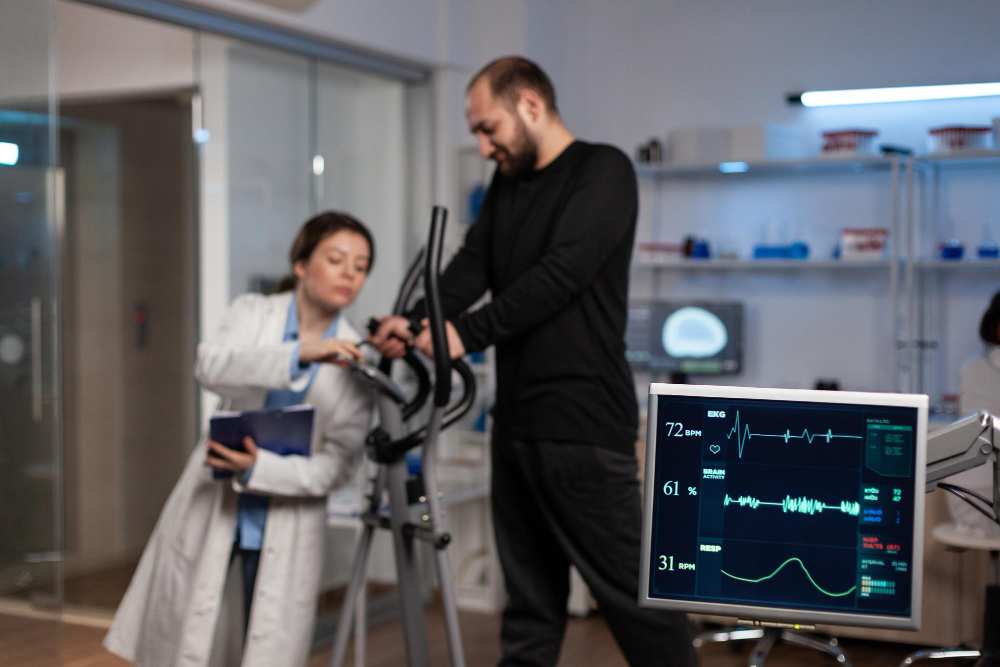
First, you wear the device for a set time. Next, the device records your heartbeat patterns. Then, the data is analyzed to find your HRV. Some devices can even send results to your doctor in real time. Because these tools are easy to use, many patients can check HRV at home.
ABOUT OUR DEVICE
MyBrainVibe is an advanced, non-invasive system designed to assess your stress response and brain-body health using Heart Rate Variability (HRV) and AI-powered analysis. It combines cutting-edge technology with clinical research to give you a clearer picture of how your nervous system is functioning — especially how your body reacts to stress.
Here’s what makes it special:HRV StressCheck: Using real-time HRV testing, MyBrainVibe evaluates how your autonomic nervous system responds to stress — giving insights into resilience, recovery, and physiological balance. This can help detect early stress imbalances before symptoms worsen.AI-Enabled Analysis: The device uses artificial intelligence to interpret complex heartbeat data and generate personalized health insights based on patterns in your HRV.User-Friendly Reporting: After the test, you receive a clear, actionable report that explains your stress profile, autonomic balance, and recovery metrics — useful for both patients and clinicians.
MyBrainVibe brings advanced stress and health analytics out of the clinic and into everyday wellbeing, empowering both individuals and healthcare professionals to monitor and improve physical and mental health with confidence
HRV as a Prognostic Tool: What the Research Says
Many studies show that HRV is a strong prognostic tool in post-cardiac rehabilitation recovery. According to the World Health Organization (WHO) and research in peer-reviewed journals, patients with higher HRV after rehab have better outcomes. For example, they may have fewer heart problems and a lower risk of hospital visits. On the other hand, low HRV after rehab can mean a higher risk of future heart issues. Therefore, doctors use HRV to help guide recovery plans and spot warning signs early.
Benefits of Monitoring HRV in Recovery
There are many benefits to monitoring HRV for heart health after cardiac rehab. Some key benefits include:Tracking how well your heart is healingSpotting early signs of stress or troubleHelping doctors adjust your rehab planGiving you feedback on your progressEncouraging healthy habits and lifestyle changes
Because HRV is easy to measure, it can be a helpful part of your recovery journey.
Practical Tips for Patients and Families
After cardiac rehab, you can take steps to support your heart health and HRV. Here are some tips:Follow your doctor’s advice and attend all check-upsUse a wearable device to track your HRV at homeKeep a daily log of your HRV and share it with your care teamPractice deep breathing or relaxation exercisesGet enough sleep each night
Additionally, family members can help by offering support and encouragement. Together, you can make recovery smoother and safer.
Prevention and Lifestyle Guidance
To keep your heart healthy after rehab, focus on these lifestyle habits:Eat a balanced diet with fruits, vegetables, and whole grainsExercise regularly, as your doctor recommendsAvoid smoking and limit alcoholManage stress with hobbies or relaxation techniquesMaintain a healthy weight
Because these habits can improve HRV, they also help lower your risk of future heart problems.
Conclusion & Call-to-Action
In summary, HRV as a prognostic tool in post-cardiac rehabilitation recovery is valuable for tracking heart health. By monitoring HRV, you and your doctor can spot problems early and adjust your care. For the best results, follow your rehab plan and keep up with healthy habits. Consult a healthcare specialist for personalized advice on HRV monitoring after cardiac rehabilitation.
References
Cygankiewicz, I., & Zareba, W. (2013). Heart rate variability. Handbook of Clinical Neurology, 117, 379–393. https://pubmed.ncbi.nlm.nih.gov/24095141/Shah, A. S., Jaiswal, M., Dabelea, D., Divers, J., Isom, S., Liese, A. D., Lawrence, J. M., Kim, G., & Urbina, E. M. (2020). Cardiovascular risk and heart rate variability in young adults with type 2 diabetes and arterial stiffness: The SEARCH for Diabetes in Youth Study. Journal of Diabetes Complications, 34(10), 107676. https://stacks.cdc.gov/view/cdc/94029World Health Organization. (2024, April 22). Rehabilitation [Fact sheet]. https://www.who.int/news-room/fact-sheets/detail/rehabilitation